Supporting Heavy Home Improvement Product Displays With Confidence
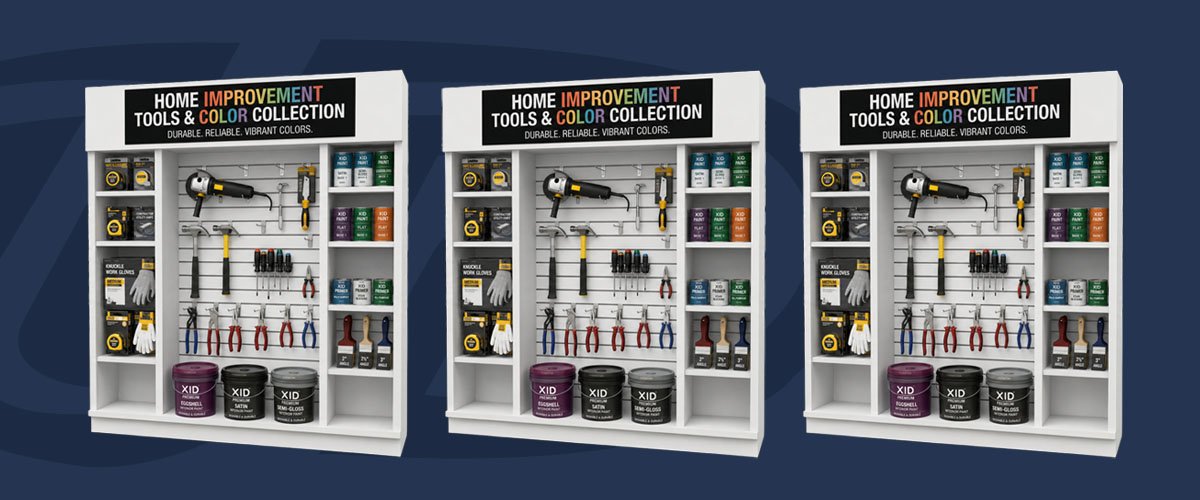
Heavy home improvement products need retail displays that work as hard as the products themselves. From power tools to building materials, these products need displays that can offer structural support while showcasing them well enough to drive sales. This guide covers the key factors to consider when displaying heavy products, including material selection, load-bearing capacity, safety standards and strategic placement.
Why Heavy-Duty Displays Matter
The right heavy-duty display solutions protect both people and revenue. Your display components should be safe and sturdy to keep items from falling, prevent injuries and minimize product loss. That's why UD Direct manufactures high-quality display support components that provide optimal stability.
Here are some reasons to incorporate smart designs into your retail merchandising plan:
Safety and Liability
Display failures can lead to safety issues. Customer and staff injuries from collapsed displays can become a legal liability, from workers' compensation claims to costly lawsuits. Product damage also adds to the overall financial impact. When power tools fall to the floor, you'll then face replacement costs and cleanup expenses.
Reputation
Brand reputation also takes time to rebuild. A display collapse captured on social media can reach thousands of customers quickly. Shoppers associate product quality with display quality, so when the display fails, it can lower their confidence in your products. Retailers with repeated display problems might be removed from vendor lists or face higher insurance premiums.
Sales Impact
Well-engineered displays directly affect customers' purchasing behavior and the store's revenue. Strategically placing your home improvement displays with the right components keeps your products accessible and visually appealing.
Display components, like shelf support tubes and reinforced feet from UD Direct, maintain structural integrity under load, preventing sagging shelves that make products difficult to reach. With better presentation, you keep merchandise at the best viewing angles to show off the product.
Factors to Consider When Displaying Heavy Products
To choose the right display components for heavy products, you'll need to explore material, structural design and weight factors:
Display Material
The first step is choosing the right material for your display:
Steel: Steel offers maximum load-bearing capacity and durability for supporting tool assortments and building materials. The material's strength-to-weight ratio makes it best for temporary retail displays that need to support hundreds of pounds while remaining light enough for in-store assembly. At UD Direct, we manufacture our support solutions from durable yet lightweight steel to effectively reinforce displays.
Powder-coated finishes: These finishes offer corrosion resistance and give your displays a more professional appearance.
Design and Load-Bearing Capacity
Load-bearing capacity describes the maximum weight a display component can safely support without structural failure. This specification determines whether you'll need shelf tubes, pole feet or wire display feet from UD Direct to match the product weight.
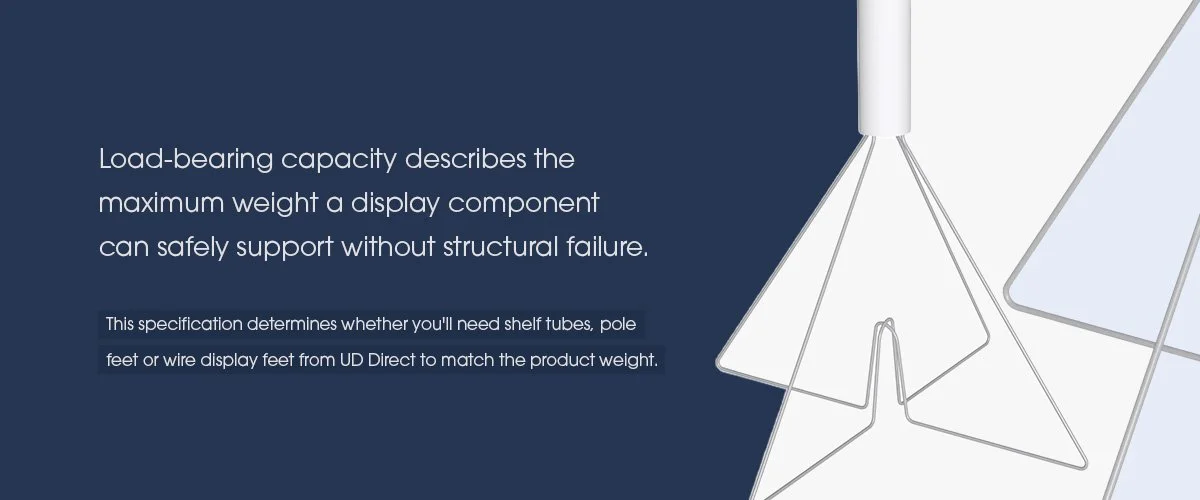
Additionally, structural design elements help make the raw material much stronger. For instance, reinforced corners and multiple support points distribute the weight throughout the display structure.
Weight Distribution and Balance
Correctly loading your products onto the shelves keeps the display stable. Here are some tips:
Place heavy items on the bottom: Place the heaviest items on lower shelves, so they can lower the center of gravity and prevent tipping.
Place items evenly on surfaces: Distribute weight evenly across shelf surfaces instead of concentrating products in one area.
Place heavy items in the middle: When merchandising mixed product weights, place the heavier items toward the center of the display and lighter products toward the edge.
Consider front-to-back weight: Balance front-to-back weight distribution to keep the displays from tipping forward.
Ensure proper base depth: Displays with deep or tall products will need enough base depth for stability.
Regularly audit the weight to make sure any products you've added haven't exceeded the design limits.
Display Safety Best Practices
Implement these safety practices to protect customers, meet industry compliance and make your displays last longer:
Following Safety Standards
UL 970 standard establishes the benchmark for display safety in commercial environments. The standard defines the testing requirements for structural integrity, stability and load capacity for safer displays. Your display will need to meet them — more retailers require their vendors to adhere to these safety standards before placing structures in stores.
Tips for Secure Assembly and Installation
Follow the manufacturer's instructions exactly when assembling and installing your displays. The manufacturer designed each component to work with specific fasteners in a particular sequence. When you use different hardware or skip steps, it affects the structure, even if it looks stable at first.
Make sure you're working with a level surface as well, as this keeps the structure stable. If the floor isn't perfectly even, you can use leveling feet or shims to compensate. Double-check that all connections are tight and locking features are in place. You might also position the displays away from high-traffic areas where shopping carts could bump into them and add stress to the structure.
Regular Maintenance and Inspection
Regular inspections are your best defense against problems before they turn into incidents. Conduct weekly checks for high-traffic areas and monthly walk-throughs for everything else. Look for the usual suspects, like loose fasteners, bent components, sagging shelves or any signs that you're pushing weight limits so you can fix them right away.
How Effective Displays Drive Sales
An effective retail merchandising display can:
Enhance product visibility: A well-designed display lifts your products above the competition and creates visual stopping points that grab attention. The right combination of height, lighting and placement makes home improvement displays pop in busy stores.
Reinforce brand presence: There's also a psychological element at work. Strong, professional-looking displays can boost your brand identity. Customers notice quality fixtures, thinking that if a structure looks sturdy and reliable, the products probably are too.
Create an engaging customer experience: A sturdy display means customers can feel comfortable picking products up, looking at them and placing them on the shelf without worrying about knocking anything over. Displays that tell a story or show products in action create shopping moments people remember. When customers can picture how that drill or those supplies will work for their project, they're much more likely to buy.
Improve aisle layout and flow: When displays are properly sized and placed, they create breathing room that makes shopping feel easier, not overwhelming. Smart placement naturally guides customers past related products and promotional items. People can discover more of what you're selling while still feeling like they have room to browse comfortably.
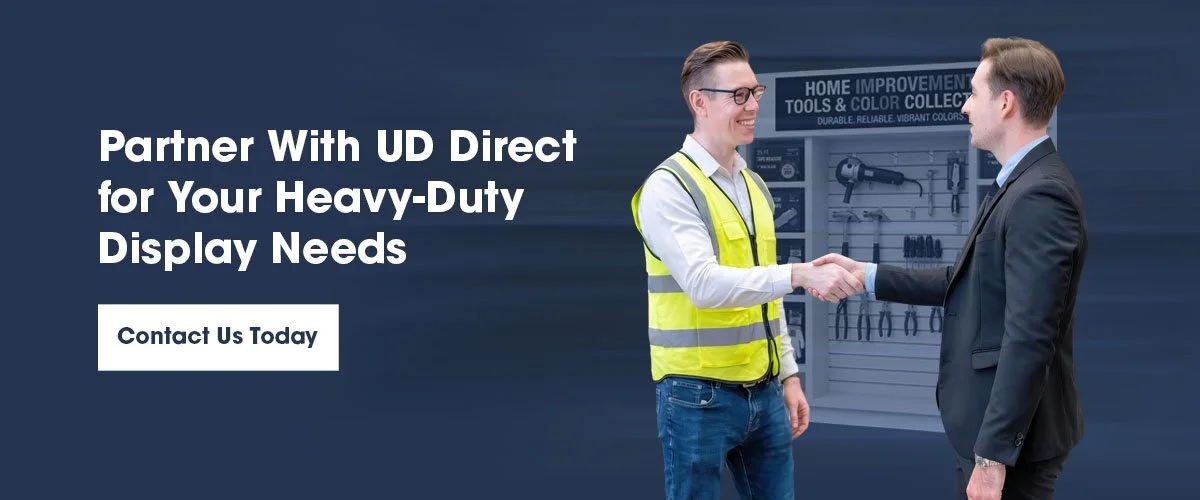
Partner With UD Direct for Your Heavy-Duty Display Needs
With the right components, installation and placement, your heavy-duty display can protect customers and drive sales. UD Direct manufactures U.S.-made components built for high-traffic retail environments. We offer everything from shelf support tubes that prevent sagging to custom pole feet designed around your exact display specifications.
We don't expect you to build your display around our products. Instead, we design our components to fit your displays. That's the UD Direct difference — customer-focused solutions backed by decades of expertise in the point-of-purchase industry.
Contact us today to discuss your display component needs.